What Does an Iron Panel Show?
An iron panel can show much more than one iron number. Learn how ferritin, CBC, TIBC, and iron saturation help explain the bigger picture.

purelyIV education · Iron infusion · Iron repletion
By purelyIV
It is natural to think of an iron infusion like filling an empty tank: receive one infusion, watch the level rise, receive another infusion, watch it rise again.
The body is more complicated than that.
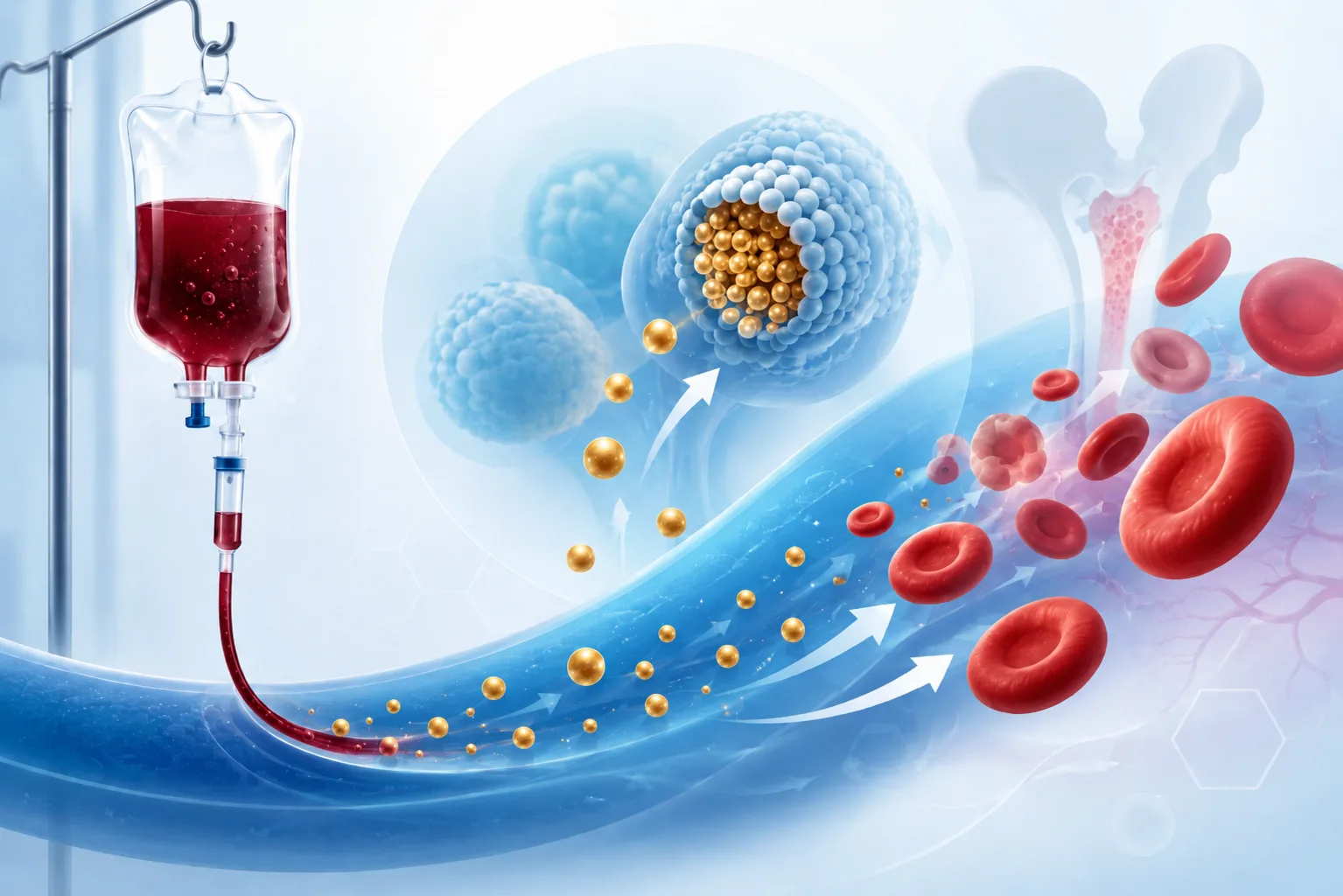
IV iron gives your body iron raw material. Your body still has to process that iron, move it where it is needed, store some of it, and use some of it to support hemoglobin and red blood cell production. That is why full repletion is usually a process, not an instant one-to-one increase after each visit.
This matters because many people are trying to understand why a treatment plan may involve a series of iron sucrose infusions instead of one larger visit. It can feel logical to ask, “If I need the same total amount of iron, why not give more at once and finish faster?”
A simple analogy helps: putting more paper in a printer does not make the printer print faster. It gives the printer more supply, but the printing process still has its own speed.
Iron repletion works in a similar way. IV iron supplies the body with iron, but the body still controls how that iron is handled and used.
Iron is essential for hemoglobin, the oxygen-carrying protein inside red blood cells. It also plays a role in muscle function, cellular function, and other normal body processes.
When iron stores are low, your body may not have enough usable iron to keep up with normal red blood cell production. That is one reason low ferritin, low iron saturation, low hemoglobin, or other iron-related lab patterns can matter.
IV iron therapy delivers iron through the bloodstream rather than relying on the digestive tract. At purelyIV, our at-home iron infusion service uses iron sucrose after current labs and an NP consult support that IV iron is the right next step.
The key point is that IV iron does not simply appear as finished hemoglobin the moment the infusion is complete.
After iron sucrose enters the bloodstream, the body has to handle that iron through normal iron-management pathways. In plain English, the body has to:
That is why an iron infusion is better understood as giving the body raw material, not as instantly changing every iron-related lab marker in a straight line.
“Iron levels” can mean several different things.
Serum iron reflects iron circulating in the blood at a given moment. Ferritin reflects stored iron. Transferrin saturation reflects how much of the blood’s iron-carrying capacity is being used. Hemoglobin shows how much oxygen-carrying protein is present inside red blood cells.
Those markers do not all move at the same speed or for the same reason.
Some values may change earlier. Others may take longer to show the effect of treatment. Some may be temporarily affected by recent IV iron dosing, which is one reason follow-up lab timing matters.
This is also why we do not judge the entire response by how someone feels the day after an infusion or by one isolated number pulled too soon. The full picture comes from symptoms, the treatment course, and follow-up labs interpreted together.
With iron sucrose, full repletion is usually planned as a series of smaller infusions. For many clients, that means around five visits, with dose and cadence guided by labs, history, and NP review.
That does not mean the process is being dragged out unnecessarily. It means the amount, timing, and monitoring are matched to the way iron sucrose is commonly administered and the way the body handles iron.
Compressing more iron into fewer visits does not automatically make the body process, transport, store, and use that iron faster. It may only increase how much iron is present at one time, while the biological work still has to happen at the body’s pace.
The goal is not just to get iron into the IV line. The goal is to support repletion in a way that is appropriate, monitored, and guided by the clinical picture.
Start with current labs and an NP review. We can review your CBC, iron panel, symptoms, and prior response to oral iron before deciding whether at-home iron infusion therapy belongs in the plan.
Some people notice changes before their full course is complete. Others do not feel a clear shift until later in the series or until more time has passed after treatment.
Several factors can affect the timeline:
That last point matters. Not every fatigue problem is an iron problem. Even when low iron is part of the picture, sleep, thyroid function, B12, vitamin D, inflammation, hormones, medications, blood loss, or other medical concerns may also deserve attention.
Follow-up labs help show whether iron stores and related markers are moving in the expected direction.
A provider may look at ferritin, transferrin saturation, serum iron, TIBC, hemoglobin, hematocrit, red blood cell indices, and symptoms together. The point is not to chase one number. It is to understand whether the overall pattern is improving and whether the next step still makes sense.
Timing matters here too. Some iron markers can be affected shortly after IV iron, so follow-up testing should be done on the schedule recommended by the clinician reviewing your plan.
A physician recommendation is useful context, but we still need a consult and current labs before moving forward with at-home treatment.
The NP review helps confirm whether the information is current, whether iron sucrose is a reasonable fit, whether any safety considerations need to be addressed, and how the at-home visit should be planned.
If you already have a recent CBC and iron panel, we can review those. If you need updated labs, our team can explain what is needed or help coordinate testing.
It depends on which marker you mean. Some blood iron markers may shift sooner, while ferritin, hemoglobin, symptoms, and overall repletion may take longer to reflect the full treatment course. Your NP can explain which labs matter most for your situation and when to recheck them.
More iron in fewer visits does not automatically make the body process and use it faster. With iron sucrose, repletion is usually planned as a series of smaller infusions so dosing, monitoring, and follow-up can match the clinical picture.
Some people notice changes early, but others need more time or more of the planned series before they feel a difference. The timeline depends on your starting labs, whether anemia is present, what caused the deficiency, and whether other issues are contributing to symptoms.
Yes. A recent CBC and iron panel are part of the review process. Labs help the NP evaluate whether IV iron is appropriate and whether another medical step should happen first.
Venofer is a brand name for iron sucrose. FDA-approved generic iron sucrose is intended to provide the same active treatment ingredient when sourced through appropriate pharmacy channels. We can explain what formulation we use during the consult process.
IV iron is not simply poured into the body and instantly converted into higher iron stores and stronger red blood cells.
It gives your body raw material. Your body still has to process, transport, store, and use that iron. That is why iron sucrose repletion is usually planned as a series and why more iron in fewer visits does not automatically speed the full biological process.
The most useful plan starts with current labs, a careful review of symptoms and history, and a clear explanation of what the treatment course is meant to do.
If you are considering iron infusion therapy, we can review your CBC, iron panel, symptoms, and prior response to oral iron before deciding whether at-home iron sucrose treatment is the right next step.
To see where this stage fits within testing, treatment choices, and recovery, visit our full iron guide.
Disclaimer: The information in this article is for educational purposes only and is not a substitute for professional medical advice, diagnosis, or treatment. Seek guidance from a qualified health professional regarding symptoms, test results, or treatment decisions.