Wedding Day IV Hydration Playbook
Learn how mobile IV therapy may fit into wedding-week hydration planning, timing, and recovery support for adults in Metro Detroit.

purelyIV education · Mobile IV visits · What to expect
By purelyIV
Bringing an IV visit to your home should make the day easier—not leave you wondering what the nurse will need, what the treatment will feel like, or what happens after the IV is finished.
The basic process is straightforward. You schedule the visit and complete your intake and consent forms. Your RN arrives with the supplies for the approved visit, confirms the details, and checks how you are feeling.
During your first purelyIV visit, the nurse initiates a web chat with a nurse practitioner for your Good Faith Exam, commonly called a GFE. On later visits, the nurse can bring the NP into the appointment again when something has changed or the nurse believes the NP should speak with you directly.
Once the visit plan is confirmed, your RN places the IV and stays with you throughout the infusion.
When the treatment is complete, the RN removes the IV, checks the site, applies a small bandage, and reviews what to expect next.
Most standard mobile IV visits take about 45 to 75 minutes from setup through wrap-up. First appointments and specialty treatments may take longer.
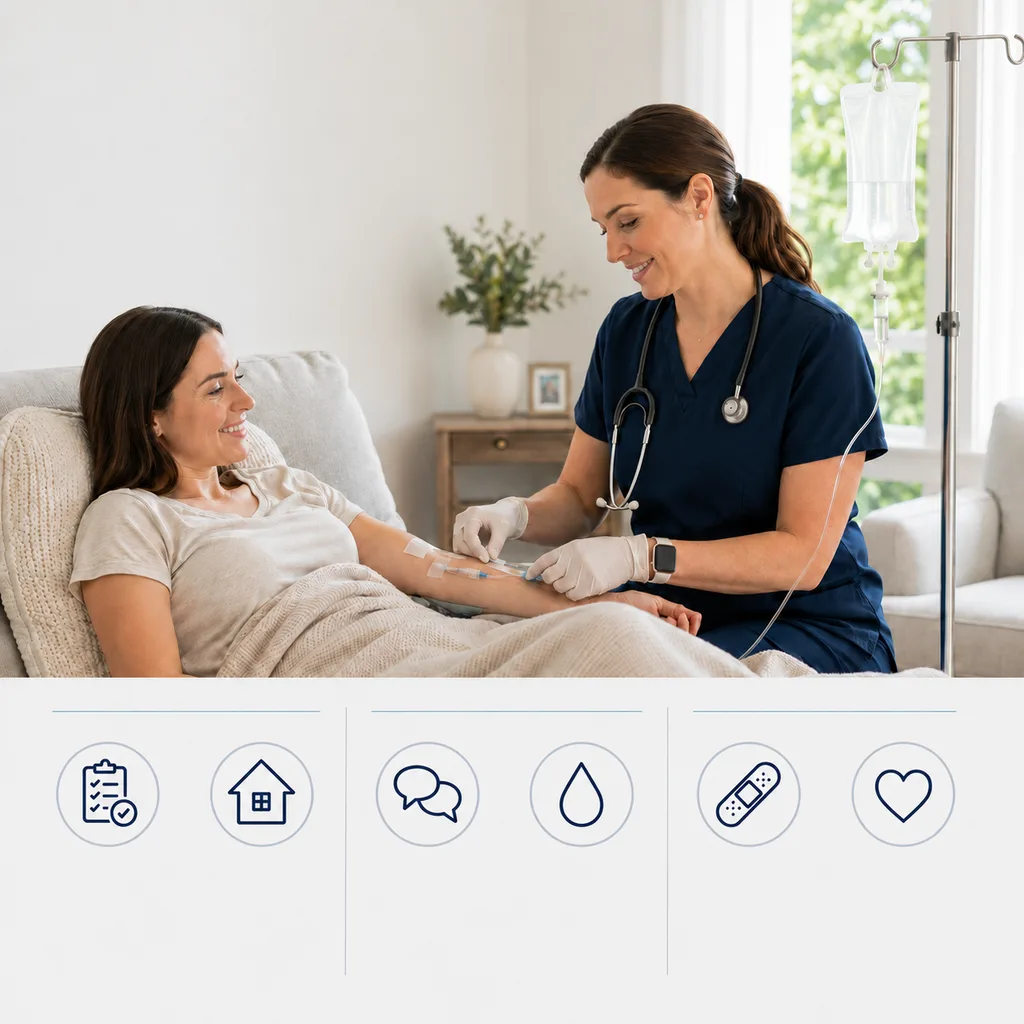
You do not need to turn your home into a treatment room. A few simple steps give your RN the information and space needed to provide the visit comfortably.
Your intake gives the care team information that cannot be gathered from the treatment name alone.
It may include:
Complete the forms as early as you can rather than waiting until the nurse arrives. They give your RN and the nurse practitioner a clear starting point for the visit and help identify anything that may need additional attention during the first-visit GFE.
If your symptoms or health have changed since you submitted the forms, tell the team before treatment begins. A new medication, worsening symptom, recent medical visit, or other change may affect the plan or give the nurse a reason to involve the NP directly.
Our guide to who may be considered for IV therapy explains how candidacy and alternate care pathways are reviewed.
Most routine wellness visits do not require complicated preparation.
Unless your clinician gives you different instructions:
A light meal or snack can help with comfort, especially if you have not eaten recently.
Specialty treatments may have their own requirements. Iron infusions, high-dose vitamin C, NAD+, Niagen®, PlaqueX®, and other specialized services may involve labs, consultations, different preparation, or longer appointment times. Follow the instructions for the specific treatment rather than relying on general IV guidance.
Your RN needs a safe place to sit, organize the visit supplies, and remain with you during the infusion.
A good setup usually includes:
Mobile appointments may take place at home, an office, or a hotel when the setting is appropriate. Share access, parking, room, gate, or building instructions before the appointment when they may affect the nurse’s arrival.
Pets do not need to disappear for the entire visit, but keeping them away from the immediate treatment area helps protect the sterile supplies and gives the nurse room to work.
Compare the current IV options, or tell us what kind of support you are looking for and the purelyIV team can help you identify the appropriate next step.
Your RN brings the supplies and equipment needed for the approved visit. That includes the treatment materials, sterile single-use IV supplies, monitoring equipment, and the items needed to dispose of used needles and other supplies safely.
The visit begins with confirmation, not with immediately starting the IV.
Your RN will confirm the visit details and ask how you are feeling that day.
This is the time to mention:
If something no longer looks appropriate, the RN may pause the process and involve the nurse practitioner before moving forward.
That is part of responsible care—not a disruption to the visit.
Before placing the IV, the RN reviews relevant baseline information such as your symptoms and vital signs.
This helps the nurse confirm that your current condition is consistent with the planned visit and gives the team a starting point for monitoring during the infusion.
A Good Faith Exam, or GFE, is the nurse practitioner evaluation completed during your first purelyIV visit.
After the RN checks you in, the nurse initiates a web chat with the NP. The NP speaks with you directly, reviews the information relevant to the visit, addresses clinical questions, and completes the first-visit evaluation before treatment proceeds.
The GFE is not automatically repeated during every appointment.
On later visits, your RN can initiate another web chat with the NP when:
This gives returning clients a smoother visit while keeping direct NP support available when the situation calls for it.
After the GFE on your first visit—or any additional NP conversation needed during a later visit—the RN confirms the treatment plan with you.
You should know what you are receiving before the infusion starts.
The RN can review the ordered treatment, the main ingredients, and any approved add-ons or medications. Ask questions when something is unclear. You should never feel as though the contents of the IV are a mystery.
Your RN selects a suitable vein, cleans the skin, and places a small IV catheter.
You may feel a brief pinch as the IV is inserted. Once the catheter is in place, the needle used for insertion is removed and a small flexible catheter remains in the vein during the infusion.
The RN secures the IV so you can relax without having to hold your arm perfectly still.
Mild soreness or bruising can happen. Tell your nurse immediately if you experience:
The nurse can check the site and slow, pause, adjust, or stop the infusion when appropriate.
Once the IV is running, your main job is to get comfortable and communicate.
You can usually read, watch television, work on a laptop, talk, or simply rest. Eating a snack is often fine unless your specific treatment instructions say otherwise.
Your RN stays with you for the full visit.
During the infusion, the nurse monitors:
If you feel nauseated, dizzy, flushed, chilled, anxious, uncomfortable, or simply “not right,” say something immediately. Do not assume that you need to tolerate discomfort to finish the bag.
The RN may slow or pause the infusion, reassess the IV site, review your symptoms, initiate a web chat with the NP, or stop treatment when that is the safer decision.
Most standard mobile IV visits take about 45 to 75 minutes. That includes setup, review, IV placement, infusion time, monitoring, removal, and wrap-up.
A first visit may take longer because it includes the Good Faith Exam with the nurse practitioner.
Timing may also depend on:
Some specialty services take considerably longer or use a different process. Follow the timing listed for the treatment you are receiving and avoid scheduling an important obligation immediately after the expected end of the visit.
When the ordered treatment is finished, the RN stops the infusion and removes the catheter.
The nurse applies pressure to the site until any bleeding has stopped, then places a small bandage. Used needles and other appropriate supplies are placed in the nurse’s sharps or disposal containers rather than left in your home.
Before leaving, the RN may review:
This is also a good time to ask any question that came up during the infusion.
Many people return to their normal activities after a routine IV visit, but the experience and response vary by person and treatment.
Continue drinking fluids and eating normally unless your clinician gives you different instructions. An IV is not a replacement for regular hydration, nutrition, sleep, or ongoing medical care.
Some people notice that they feel more hydrated or refreshed. Others notice a subtler change. The way you feel immediately afterward does not prove that one treatment or a particular visit frequency is right for you long term.
A small amount of tenderness or bruising can occur after a peripheral IV.
Follow the nurse’s instructions for the bandage and observe the site through the next day. Contact purelyIV or another appropriate healthcare provider if you develop:
Call 911 or seek emergency care for trouble breathing, chest pain, fainting, severe dizziness, swelling of the face or throat, or another severe or rapidly worsening reaction.
Contact the team when something does not feel right, even when you are uncertain whether it is related to the IV.
The clinical team can help determine whether the concern can be addressed with routine guidance, needs NP review, or should be evaluated in another setting.
For emergency symptoms, do not wait for a response from purelyIV before seeking emergency care.
A good mobile visit should not feel disconnected from the next one.
Follow-up gives the care team useful context when you have questions, experience an unexpected response, or are considering another visit.
Useful feedback includes:
That information may lead the clinician to keep the same plan, choose a different treatment, adjust an ingredient or infusion approach, recommend labs, reconsider visit frequency, or suggest another form of care.
There is no single IV schedule that is right for everyone. Frequency should reflect your goals, health history, response, and the service being considered.
A mobile IV appointment should feel convenient, calm, and clinically supported from beginning to end.
The intake helps the team prepare. On your first visit, the RN connects you with an NP by web chat for the Good Faith Exam. On later visits, the nurse can involve the NP again whenever something needs direct clinical discussion. Your RN then confirms that the plan still fits, stays throughout the infusion, and monitors both the IV and how you are feeling.
The visit ends with safe IV removal, aftercare guidance, and a clear way to ask questions afterward.
You should know what is happening at every step—and you should always feel comfortable speaking up.
Explore the current IV options and schedule a visit at your home, office, or hotel. If you are unsure which service or care pathway fits, the purelyIV team can help before you book.
Disclaimer: The information in this blog post is for informational purposes only. It is not a substitute for professional medical advice, diagnosis, or treatment. Always seek the guidance of a qualified health professional with questions about a medical condition. Call 911 or seek emergency care for severe or potentially life-threatening symptoms.