I want to understand what NAD+ actually is
Start with the biology: what NAD+ does in the body, why it gets so much attention, and where the evidence for NAD+ support is stronger or weaker.
Learn what NAD+ is
NAD+ support, explained simply
NAD+ plays an important role in cellular energy, metabolism, and signaling. But the treatments and supplements marketed around NAD+ do not all work the same way.
Some deliver NAD+ itself. Others use precursors—molecules your body can use to make NAD+. And IVs, injections, and oral supplements each create a different treatment experience.
The science is also more limited than much of the marketing suggests.
This guide explains the differences, what human research actually shows, and where to go next based on what you are trying to understand.

You do not need to understand NAD+ biology or know which product you want before you begin.
Start with the question that sounds most like yours.
Start with the biology: what NAD+ does in the body, why it gets so much attention, and where the evidence for NAD+ support is stronger or weaker.
Learn what NAD+ isThese IVs are related, but they do not deliver the same molecule. The useful comparison is what each contains, how the infusion experience differs, and what the available studies have—and have not—shown.
Compare Niagen IV and NAD+ IVThe delivery method changes the visit, convenience, clinical oversight, and available evidence.
Compare NAD+ delivery optionsNAD+ stands for nicotinamide adenine dinucleotide.
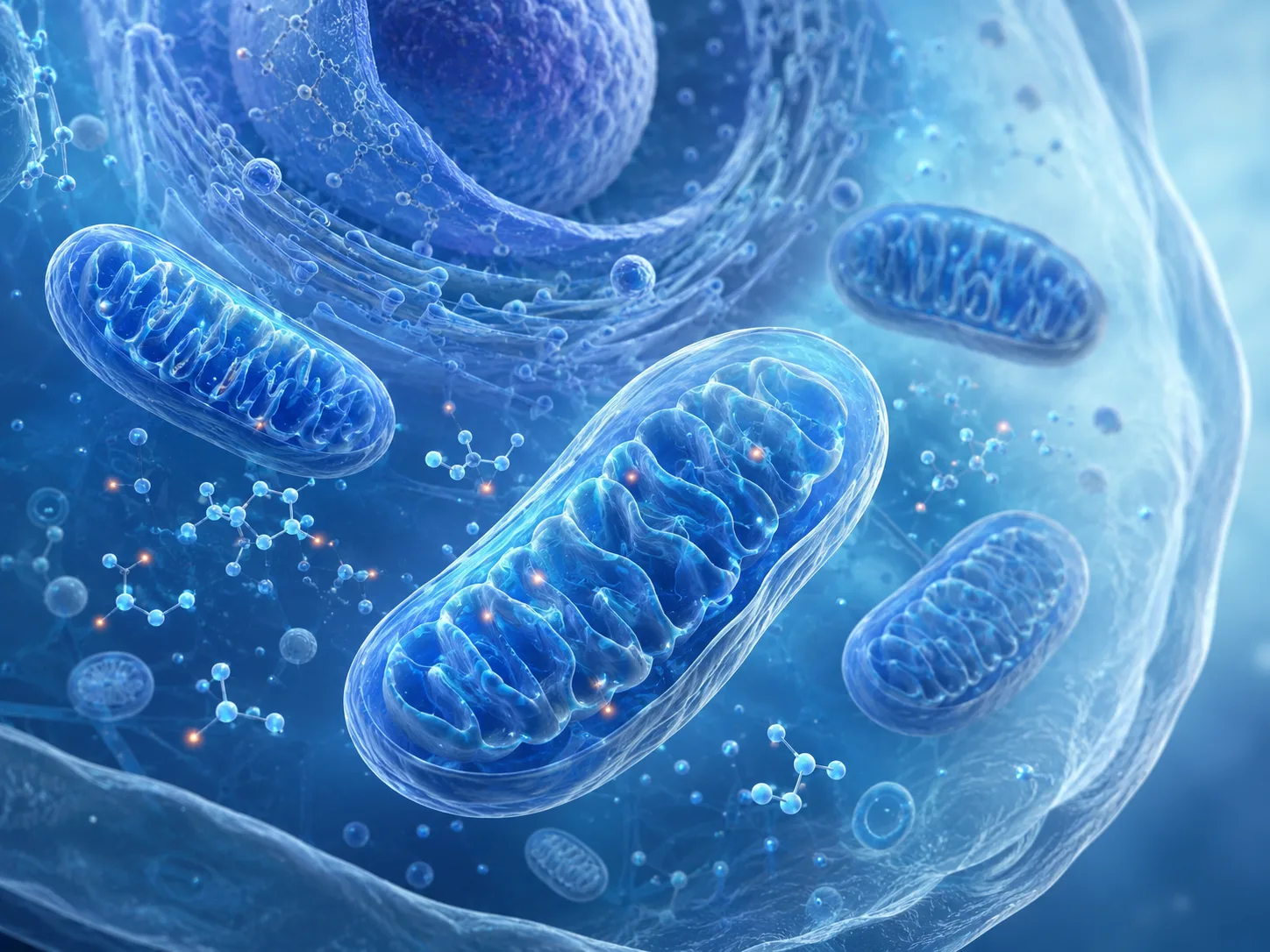
It is a coenzyme found throughout the body and is involved in cellular energy metabolism, signaling, and other normal cellular processes. That biology is well established.
What is less established is what happens when NAD+ or its precursors are used as wellness treatments.
That distinction matters.
There is a difference between saying NAD+ is important to normal cellular function and saying that increasing NAD+ through a particular treatment will reliably improve energy, cognition, recovery, or healthy aging.
Human research has not established those broader outcomes consistently.
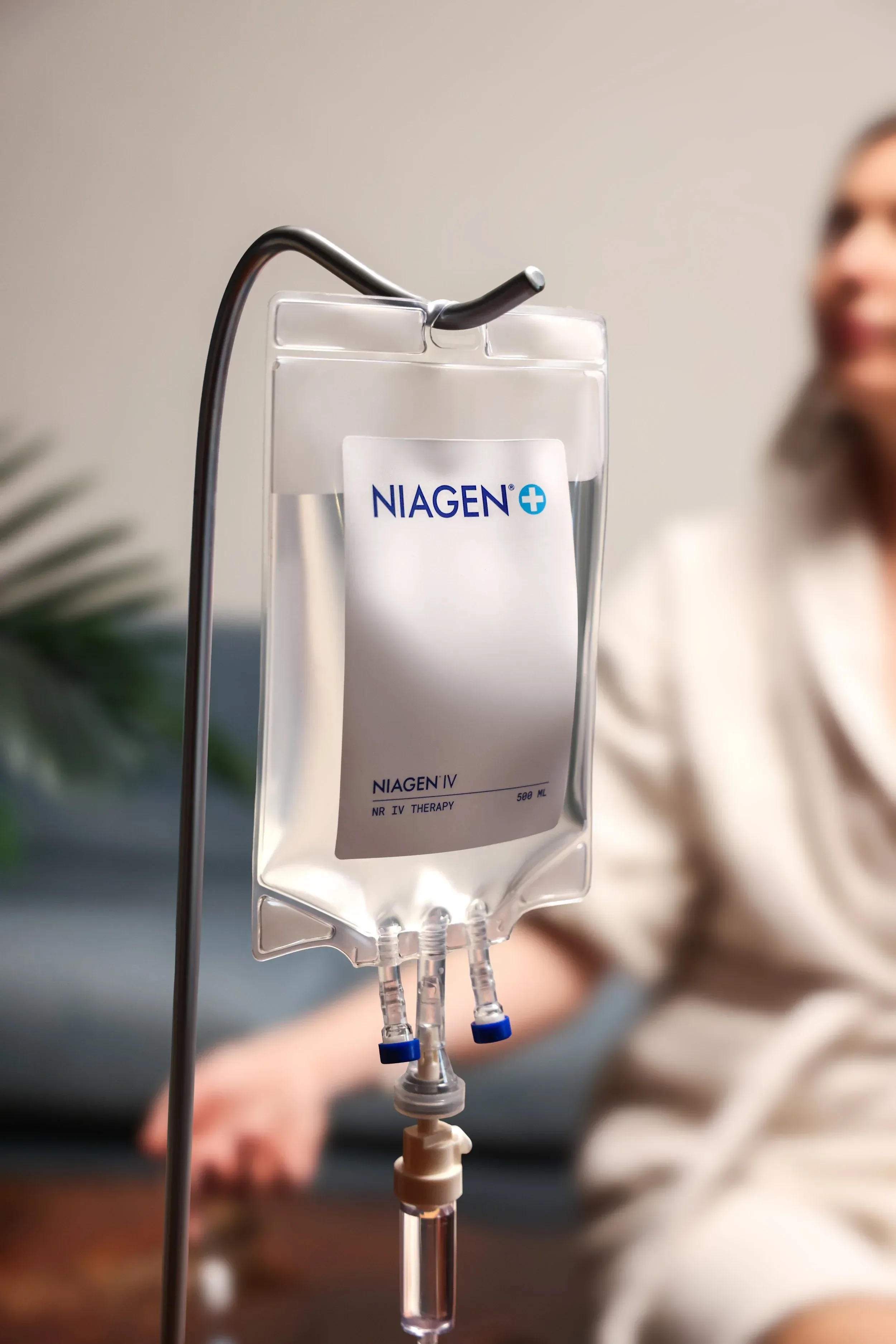
Niagen® is nicotinamide riboside chloride, often shortened to NR.
NR is a form of vitamin B3 and an NAD+ precursor. Your body can use it as part of the pathway that produces NAD+.
That creates a simple but important distinction:
NAD+ → the coenzyme itself
Niagen / NR → a precursor the body can use to make NAD+
So NAD+ IV and Niagen IV belong in the same broader conversation, but they are not interchangeable versions of the same substance.
That also means research on one form should not automatically be treated as proof that another form produces the same clinical result.
The biggest established differences today are what is being infused and what the visit may be like.
A randomized pilot study remains a preprint, while a separate 2026 retrospective study involved only 14 people. Both support further study rather than a claim that one IV has been proven clinically superior.
Read the full Niagen IV vs. NAD+ IV comparisonIV therapy is only one way NAD-related support is discussed.
Injection-based options offer a different experience from an IV visit. They may involve clinician-administered or clinician-guided use depending on the product and care plan.
They should not automatically be viewed as a smaller version of an IV or assumed to produce the same effects.
Oral nicotinamide riboside and other NAD+ precursors are usually used as daily supplements rather than visit-based treatment.
This is actually where much of the human NAD-boosting research exists.
Human studies consistently show that oral NR and NMN can increase circulating NAD-related metabolites. But clinical outcomes involving metabolism, physical function, vascular health, and other wellness measures have been mixed and are often endpoint-specific or null.
That means raising a blood biomarker and producing a meaningful health outcome are not the same thing.
The evidence is easiest to understand in layers.
The biology is strong. NAD+ is important to normal cellular function.
Oral precursor evidence is much deeper. Oral NR and NMN have repeatedly demonstrated that they can change circulating NAD-related biomarkers in humans.
Health outcomes are less consistent. Raising NAD-related biomarkers has not translated into predictable improvements across the many wellness and healthy-aging outcomes being studied.
IV evidence is still early. A 2026 systematic review found no eligible human outcomes trials of intravenous or intramuscular NAD+ itself for anti-aging or wellness indications.
And the available direct comparisons of NAD+ IV with IV nicotinamide riboside are still small and focused mainly on infusion time, tolerability, short-term safety, and biomarkers rather than meaningful long-term outcomes.
So the useful question is not, “Which NAD product has the biggest claims?”
It is, “What does the evidence actually support for the option I am considering?”
There is no single blood NAD+ number that tells you which NAD-support option is right for you.
NAD+ biology varies by tissue and context, and a blood NAD+ measurement should not be treated as a simple score of cellular health or aging.
That does not mean lab testing is never useful.
Labs may matter when there is a broader health question, persistent symptoms, medication monitoring, or another clinical reason to investigate something more specific.
But testing should answer a real health question—not be used simply to generate a “NAD score.”
Related guide: Lab Testing & Blood Work
Start with your goal rather than the product.
Ask:
For IV care, tolerance and pacing also matter.
The available comparative studies suggest the infusion experience may differ significantly between NAD+ IV and IV NR, but individual response still varies.
The goal of clinical review is not to promise an outcome. It is to determine whether the option makes sense for you and set reasonable expectations.
There is no universal response or follow-up schedule.
How someone feels after an NAD-related treatment does not prove that NAD+ levels changed in a clinically meaningful way, and a change in a biomarker does not automatically mean a person will feel different.
Follow-up should depend on why the treatment was chosen in the first place.
That may mean simply deciding whether the experience was worthwhile, discussing tolerance, reconsidering the format, or determining whether another health question deserves more attention.
For ongoing symptoms, a broader clinical evaluation may be more useful than repeatedly escalating an NAD-support treatment.
The right next step depends on what you are actually trying to compare.
See current treatment options, visit expectations, pricing, and how purelyIV delivers NAD+ IV care.
Explore NAD+ IV TherapySee current Niagen IV, push, and shot options, pricing, visit timing, and service details.
Explore Niagen IVStart with the deeper comparison of NAD+ IV, Niagen IV, injections, and oral options before deciding whether a treatment visit makes sense.
Compare NAD+ OptionsMedical note: This guide is for general education and does not diagnose medical conditions or establish that NAD+ support will improve a particular symptom or health outcome. Treatment and supplement decisions should consider your goals, health history, medications, current symptoms, available evidence, and clinician guidance.